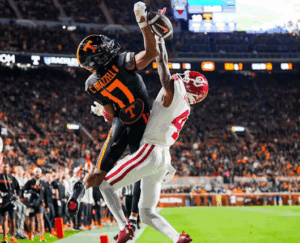
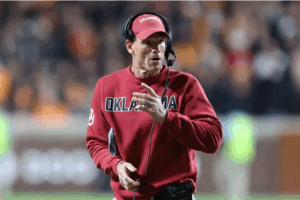
Game context and framing
Oklahoma entered the matchup with a narrative of tempered expectations after a difficult 2024 and heavy roster turnover; preseason projections treated the Sooners as a rebuild with upside but plenty of uncertainty, making the game at Tennessee a potential resume-builder if they could win on the road.
Final score and quick box
Oklahoma 33, Tennessee 27 — a road victory in Neyland that kept Oklahoma’s midseason surge alive and knocked Tennessee out of realistic College Football Playoff contention.
Key stats and timeline
- The Sooners won the turnover battle and converted those takeaways into points, an advantage that swung the game in their favor.
- Oklahoma’s John Mateer finished with a decisive two-way impact — modest passing numbers but a game-clinching rushing touchdown late in the fourth quarter that sealed the road win.
- Kicking was unusually influential: Oklahoma’s Tate Sandell converted multiple long field goals to keep scoring parity while Tennessee’s Max Gilbert also connected from distance, keeping the scoreline close into the fourth quarter.
Pivotal moments
- Early turnovers by Tennessee created a 13-point swing in field-position and points that forced the Volunteers into catch-up mode and altered their play-calling balance for much of the night.
- A long Oklahoma explosive run in the third quarter set up a late lead and was followed by a sequence where the Sooners leaned on short-yardage and clock-management fundamentals to close the game.
- Tennessee’s late scoring drives narrowed the margin, but a mid-fourth-quarter Oklahoma touchdown and the Sooners’ ability to sustain a final possession removed the opportunity for a last-minute Vols comeback.
What worked for Oklahoma
- Turnover creation and opportunistic scoring: forcing mistakes and quickly converting them into points neutralized Tennessee’s yardage advantages and put pressure back on the home offense.
- Complementary special teams: reliable, long-range field goals kept drives from stalling and gave Oklahoma breathing room when sustained offensive drives were limited.
- Two-way toughness at quarterback: Mateer’s mobility provided a late-game mismatch when Tennessee tightened coverage against the passing game.
What broke for Tennessee
- Self-inflicted errors: three turnovers (two interceptions and a fumble) were the decisive negative factor and outweighed Tennessee’s statistical advantages in other areas.
- Inability to convert early scoring chances into separating drives forced reliance on the late clock and higher-variance plays, which reduced margin for error.
- Special-teams and opponent long-field goals kept Tennessee from building an insurmountable lead despite moving the ball effectively at times.
Tactical fixes (practical, week-to-week)
- Oklahoma: keep emphasizing turnover-creation schemes and clock-management packages; refine third-down play-calling to avoid overtime reliance and protect kickers by prioritizing closer scoring opportunities.
- Tennessee: obsessively rehearse ball‑security in seven-on-seven and live-drill periods; simplify early-drive scripts to stabilize the offense and avoid high-risk throws; prioritize situational defensive reps against mobile quarterbacks to limit late scrambling options.
Where each team goes from here (short- and medium-term)
- Oklahoma (short term): the road win reintroduces the Sooners as an SEC dark-horse and gives Brent Venables’ staff momentum going into a difficult November stretch; protecting this formula—defense + special teams + situational offense—gives Oklahoma a realistic path to finishing strong in the league.
- Oklahoma (medium term): if the staff sustains opportunistic defense and Mateer continues to be a two-man advantage, Oklahoma can finish above preseason expectations and possibly secure a top‑25 finish, but offensive consistency remains the limiting variable.
- Tennessee (short term): the loss removes them from playoff contention and forces a short-term reset: shore up turnover prevention, simplify game starts, and treat the next two to three weeks as a “rebuild the process” window to regain confidence and execution.
- Tennessee (medium term): talent and roster construction still project Tennessee as a top‑tier program, but Heupel’s team must reduce self-inflicted errors and improve quarterback decision-making in pressure moments to translate talent into sustained championship contention.
Bottom line
Oklahoma won by doing the dirty work—forcing turnovers, making long kicks, and finishing drives when it mattered—while Tennessee lost despite moving the ball because turnovers and situational miscues erased advantages. If Oklahoma sustains that identity they ride a clear upward trajectory; Tennessee must fix fundamentals quickly or risk a promising season slipping away.